
Technology Leadership Outcomes, Grounded in Real Business Context
Our leadership team brings experience from leading complex technology and transformation engagements across industries and geographies. These examples illustrate business challenges they have personally led and helped address, and the outcomes achieved. Client-identifying details are generalized where appropriate to protect confidentiality.
Selected Outcomes Across Our Five Service Pillars

From Fragmented Regional Infrastructure to a Governed Global Consolidation Roadmap
A decade of independent regional growth left virtualization, network and cloud environments fragmented across North America, Europe and Asia, with production systems operating beyond safe failover capacity and no validated disaster-recovery test in over three years.
Our leadership team conducted a full-scope architecture-led assessment across 80+ virtualization hosts and 1,500+ monitored assets, producing a single, risk-prioritized three-phase consolidation and resilience roadmap.
Identified $70K–$90K in annual Azure savings and a 15–20% server footprint reduction achievable without new capital investment, while resolving the two most severe availability risks immediately.

From Fragmented Technology to a Business-Aligned Transformation Roadmap
Years of incremental growth had left the technology environment fragmented across applications and platforms, with integration dependencies, legacy constraints and no clear sequence for what to modernize first.
Our leadership team assessed 20+ applications and platforms and 50+ integration points and dependencies, then developed a three-year, business-aligned transformation roadmap covering architecture, cloud, integration, security and operations.
A modernized application and technology architecture, integrated platforms, stronger security and improved operations — creating a foundation for future digital, data and analytics capabilities.

From Operational Complexity to a Digitally Governed, Export-Ready Enterprise
Ahead of international expansion, the organization relied heavily on manual coordination and fragmented data across production, cold-chain logistics, quality and compliance, limiting real-time visibility and predictability.
Our leadership team assessed the business strategy, value chain and digital maturity, then prioritized initiatives using an Impact vs. Feasibility framework across five transformation pillars in a 30-month roadmap.
Digitally governed, insight-driven operations with integrated data, forecasting, quality and traceability capabilities, supporting the organization's transition to an export-ready enterprise.
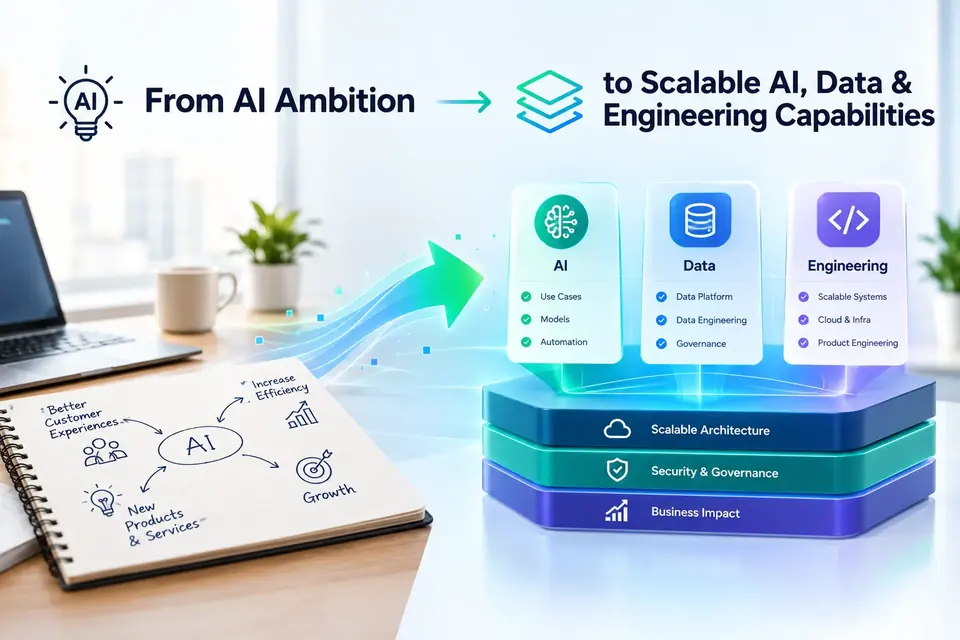
From AI Ambition to Scalable AI, Data & Engineering Capabilities
AI experiments across products, customer experience and operations were developing faster than the organization's ability to scale them, with fragmented data, evolving engineering practices and no clear prioritization.
Our leadership team assessed 15+ AI opportunities alongside data and engineering readiness, then built a four-phase roadmap connecting AI investment to the data and engineering capabilities required for production.
A prioritized AI strategy and investment portfolio, stronger data and engineering foundations, and a clear, governed path from AI experimentation to production and scale.
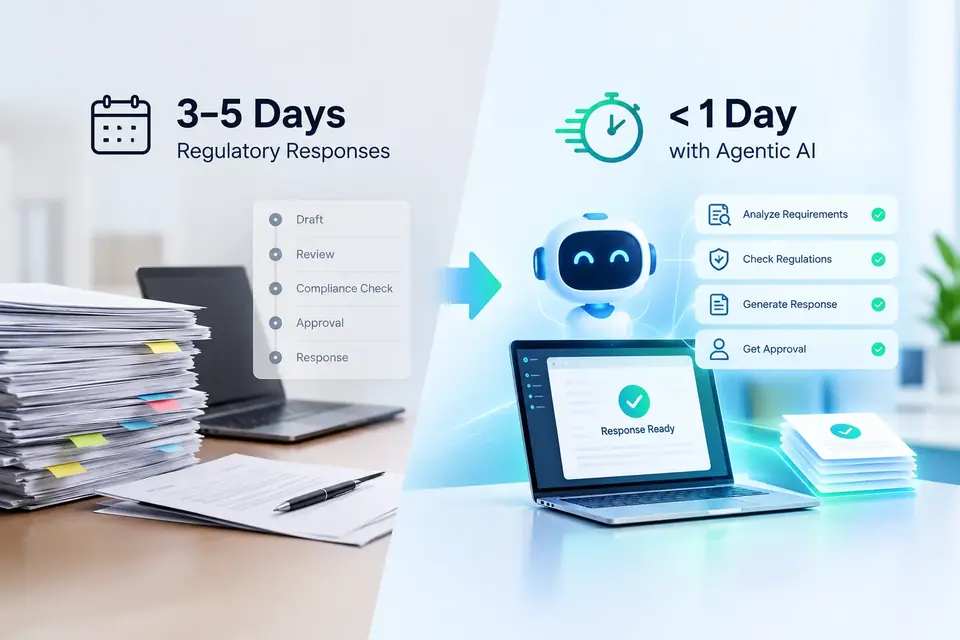
From 3–5 Day Regulatory Responses to Under One Day with Agentic AI
Evidence, prior testimony and data requests were scattered across SharePoint, network shares and mailboxes, with regulator data requests taking 3–5 days and carrying the risk of inconsistency with prior testimony.
Our leadership team designed a five-agent platform — intake, precedent retrieval, drafting, consistency check and review packaging — using hybrid retrieval with full source citations and confidence-based routing to a named reviewer.
~80% faster data-request turnaround, 900+ analyst hours returned per filing cycle, and 100% of generated content carrying citations to support audit sign-off.
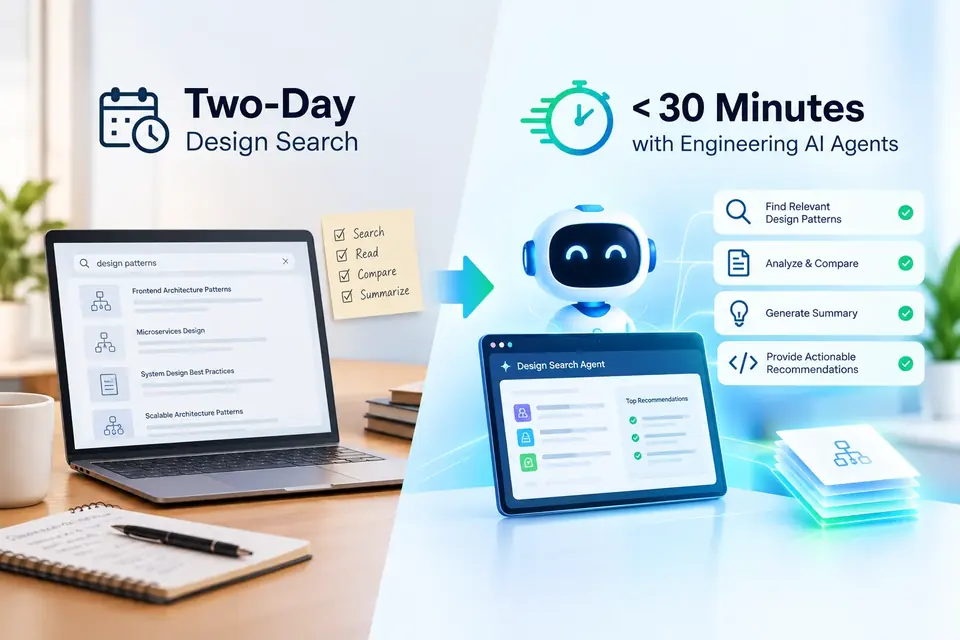
From Two-Day Design Search to Under 30 Minutes with Engineering AI Agents
Engineers frequently re-solved problems already solved elsewhere, spending days searching for a comparable prior design, while part-number proliferation and late-surfacing quality history drove up cost and rework.
Our leadership team built a five-capability engineering agent ecosystem across PLM, quality and documents — knowledge, reuse, quality-intelligence, compliance and change initiation — with existing source-permission inheritance enforced throughout.
Design reuse rose from 22% to 41% against a 35% target, comparable-design search fell from ~2 days to under 30 minutes, and 380 of 520 engineers adopted the tools within four months.
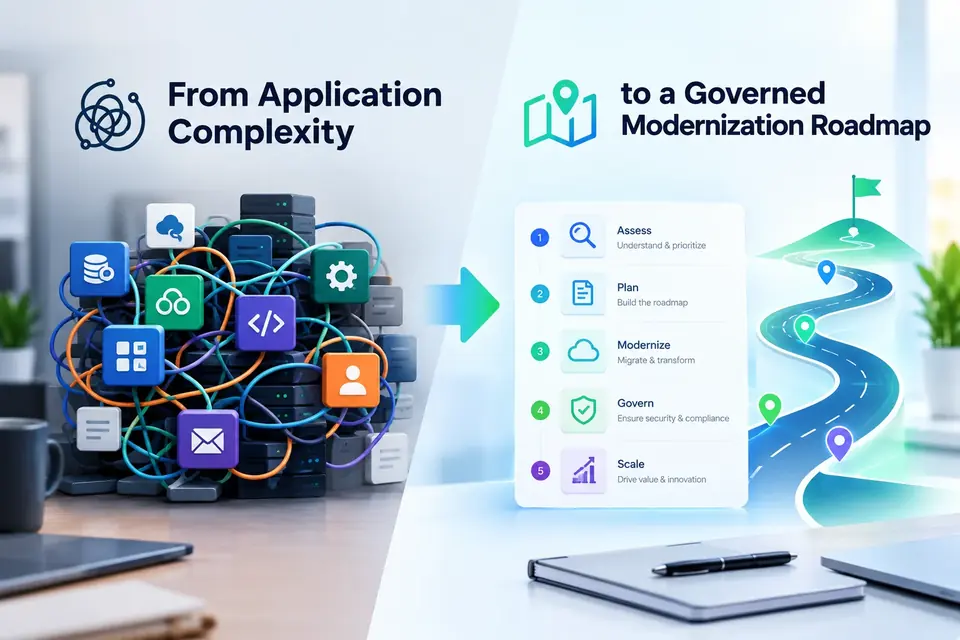
From Application Complexity to a Governed Modernization Roadmap
A 180+ application estate with four interconnected ERP integration points made modernization decisions highly interdependent, with no consistent way to decide what to retain, modernize, replace, retire or sequence.
Our leadership team ran a nine-step, capability-led Enterprise Architecture assessment connecting business priorities, portfolio evidence, a five-path decision framework, transition architectures and delivery governance into one end-to-end roadmap.
180+ applications brought under a common portfolio decision model, four ERP integration points incorporated into dependency-aware sequencing, and 10+ reusable EA outputs created for ongoing planning and governance.
Your Situation Is Different — Let's Discuss It Directly.
Every engagement starts with the specifics of your business, not a generic playbook. Tell us about your technology challenge and we'll help identify the right next step.